


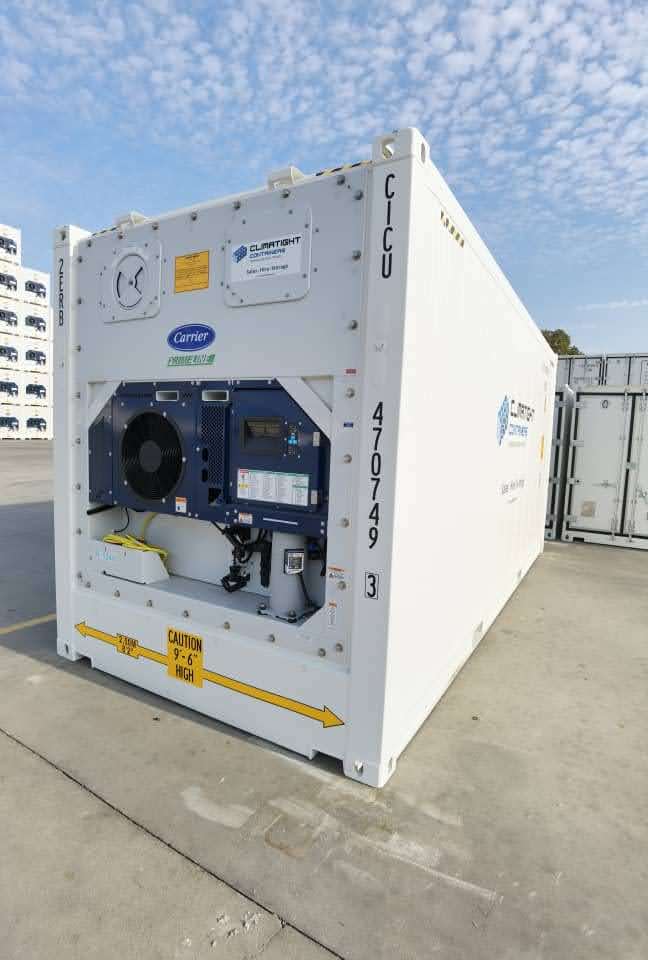
Refrigerated shipping containers, often called reefer containers, are essential for transporting temperature-sensitive goods safely and efficiently. These specialised containers maintain consistent temperatures, ensuring the quality of perishable items during transit.
In this article, we will explore how refrigerated shipping containers work and their importance in various industries.
Understanding Refrigerated Shipping Containers
A refrigerated shipping container has a built-in refrigeration system. These containers maintain specific temperatures for transporting goods, typically between -30°C and +30°C.
Reefer containers are crucial for industries that rely on the transportation of perishable or temperature-sensitive products, such as food, pharmaceuticals, flowers, temperature-sensitive mining materials, and more.
Components of Refrigerated Shipping Containers
Several key components work together to ensure that refrigerated shipping containers maintain the desired conditions:
Insulation Materials
High-quality insulation materials, such as polyurethane foam, line the floor, walls, and ceiling of the shipping container. This insulation helps to minimise heat transfer between the interior and exterior environments, maintaining a stable temperature inside the container.
Refrigerated Units
The refrigeration unit, typically located at one end of a reefer container, powers the container. These units use electricity to operate compressors, condensers, and evaporators, cooling the air inside. The system then circulates the cooled air throughout the container to maintain a consistent temperature.
Control Systems
Advanced control systems monitor and regulate the container’s temperature, humidity, and atmosphere. These systems maintain the desired conditions throughout the journey. They adjust the refrigeration unit’s performance as needed to compensate for external factors like ambient temperature changes.
Types of Goods Transported in Refrigerated Containers
Refrigerated shipping containers can transport a wide variety of perishable and sensitive goods, including:
Flowers: Reefer containers help to maintain the freshness and quality of cut flowers during long-distance transportation.
Food Products: Fruits, vegetables, meat, and dairy products require specific temperature ranges to prevent spoilage and maintain their quality during transit.
Temperature-Sensitive Mining Materials: Some mining materials, such as explosives, require temperature-controlled environments for safe transportation.
Pharmaceuticals and Medical Supplies: Many medical products, including vaccines and certain medications, must be kept within strict temperature ranges to maintain their efficacy.
Hiring vs. Buying Refrigerated Containers
When considering refrigerated containers, businesses must decide whether to hire or buy. Several factors influence this decision:
Cost Considerations
Buying a refrigerated container requires a significant upfront investment, while hiring allows for more flexibility and lower initial costs. However, if your business frequently needs refrigerated containers, buying may be more cost-effective in the long run.
Advantages of Buying
- Cost-effective for Frequent Use: Ownership can be cheaper over time if you use the containers regularly.
- Asset Ownership: The container becomes a business asset, which can be beneficial for financial statements.
Disadvantages of Buying
- High Initial Cost: You require a significant upfront investment.
- Maintenance Responsibility: Ongoing maintenance and repair costs fall on the owner.
Climatight Refrigerated Shipping Container for Sale
You can buy Climatight Containers’ containers with a deposit, with the final payment due upon delivery. We offer special payment arrangements; contact our team to discuss and get a free quote.
Advantages of Hiring
- Lower Initial Costs: You do not need a significant upfront investment.
- Flexibility: Ideal for short-term needs.
Disadvantages of Hiring
- Long-Term Costs: Using rentals frequently can be pricey.
- Availability Issues: Relying on rental providers means the containers may not always be available.
Climatight Refrigerated Shipping Containers for Hiring
We set up a direct debit or credit card charge, applied on the first working day of each month for subsequent months’ hire. Payment for the first 30 days’ rental, including transport delivery and pick-up charges, is due in advance.
Duration of Need
If your business only needs a refrigerated container for a short period, such as a one-time shipment, hiring may be the most practical option. On the other hand, if the need for refrigerated transportation is ongoing, buying a container may be more suitable.
Advantages of Buying
- Always Available: The container is always ready for use, eliminating delays in availability.
- Customisation: Ability to modify the container to meet specific business needs.
Disadvantages of Buying
- Commitment: You’re committed to the container, even if your needs change.
Advantages of Hiring
- Short-Term Flexibility: Ideal for temporary or seasonal needs.
- No Long-Term Commitment: It is easy to return the container after use.
Disadvantages of Hiring
- Temporary Solution: Not suitable for long-term or ongoing needs.
Frequency of Use
Businesses that regularly transport temperature-sensitive goods may benefit from owning their refrigerated containers, as this ensures availability and reduces reliance on rental providers.
Advantages of Buying
- Dependability: Ownership guarantees the container’s availability whenever needed.
- Reduced Dependence on Rentals: Less reliance on external providers, ensuring more control over logistics.
Disadvantages of Buying
- Storage Requirements: Requires space to store the container when not in use.
- Depreciation: The container loses value over time.
Advantages of Hiring
- No Storage Issues: You do not need to worry about storing the container when it’s not in use.
- Access to the Latest Technology: You can hire the latest models without worrying about depreciation.
Disadvantages of Hiring
- Higher Long-Term Costs: Ongoing rental fees can add up over time.
- Potential Availability Delays: You may face delays if rental providers are out of stock.
We offer flexible leasing options to meet your needs, whether short-term or long-term, depending on the container type and lease duration. Pricing is negotiable, and we typically offer discounts for longer leases.
Have more questions? We have answers. See our FAQ section for more information.
Conclusion
Refrigerated shipping containers uphold the safety and quality of perishable goods during transport. We hope you now understand how these containers function. By considering key factors, you can make informed buying or hiring decisions easily.
At Climatight Containers, we offer refrigerated shipping containers that are perfect for a wide range of industries and many different uses. Check out our refrigerated shipping containers for sale or hire, or you can email us at sales@climatight.com.au or call 0475 000 560.