


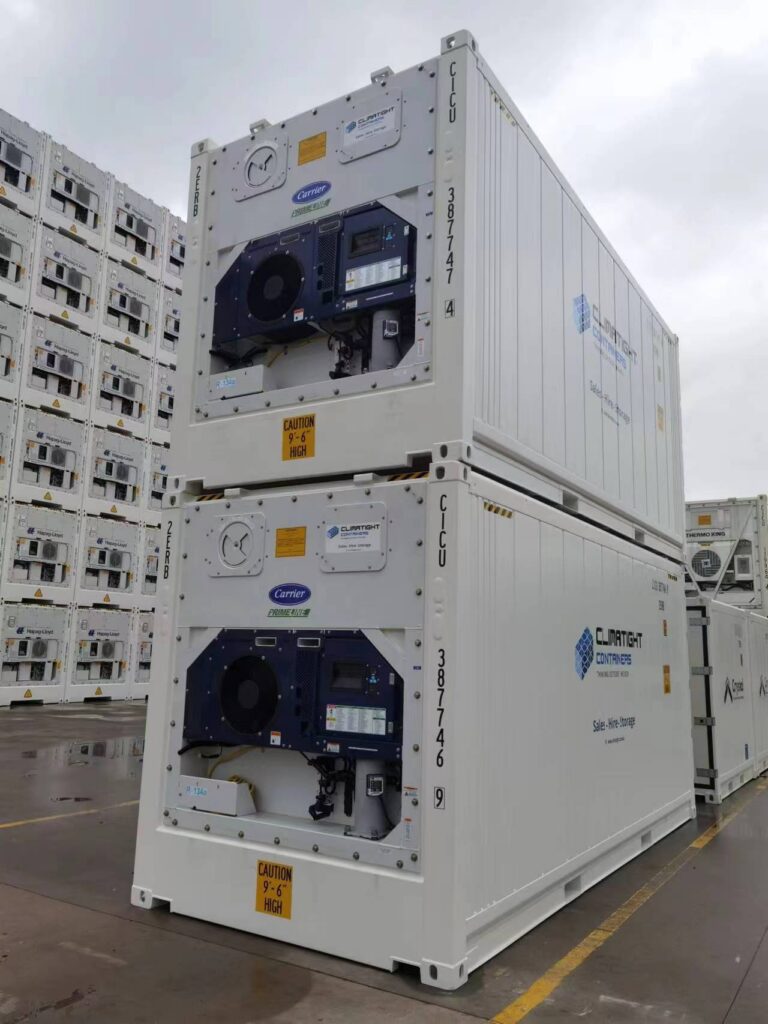
Small businesses across Australia rely on dependable cold storage more than ever. From cafés and caterers to regional producers and healthcare providers, temperature control is mission-critical.
This leaves many small businesses with a big decision to make. Should they commit to purchasing a refrigerated shipping container, build dedicated cold storage, or look into leasing refrigerated containers?
The best option depends on the business. However, refrigerated container rental often provides greater flexibility, budget clarity, and compliance – all things that matter to small and seasonal businesses.
Why Cold Storage Decisions Matter for Small Business
From florists to farmers and even pharmacists, maintaining the right conditions protects stock, margins, and business reputation. Refrigerated storage is often vital for compliance with Australian Standards as well.
However, storage needs fluctuate throughout the year – in these industries and many others.
Committing to permanent infrastructure or outright container ownership can lock a business into high fixed costs. If demand doesn’t keep up year round, this can leave a big budget gap.
That’s where refrigerated container rental becomes a strategic solution.
What Does Leasing Refrigerated Containers Actually Mean?
Leasing allows a business to use a refrigerated sea container for an agreed period without purchasing the unit outright.
This can take several forms:
- Short-term refrigerated container hire
- Long-term lease agreements
- Flexible refrigerated container rental for seasonal demand
- Single or multi-unit lease agreements
- Leasing accessories for special use cases
For seasonal and growing businesses, there are a lot of benefits to leasing refrigerated containers.
Lower Upfront Costs and Better Budgeting
Purchasing a 20ft refrigerated container costs anywhere from $11,000 to $40,000 or more. And that’s before customisations like shelving or internal lighting, not to mention ongoing maintenance, repairs and transport to site.
Compare that to the cost of leasing refrigerated containers, which can be as little as just $20 per day.
You’d need to rent a refrigerated sea container for 550 days just to reach the lowest end of purchasing a new one.
That’s a lot of extra money that could be better directed towards stock, marketing, staffing, or expansion.
Compromising on Quality to Save Money on Budget Equipment
The lower price of used shipping containers can be tempting, especially for small businesses with limited budgets. But older, cheaper refrigerated containers often come with hidden trade-offs:
- High repair and refurbishment costs
- Increased breakdown risk
- Reduced cooling efficiency
- Inconsistent temperature control
Those upfront savings are quickly eaten away by repair costs, downtime, and product losses.
Leasing refrigerated containers eliminates these risks. You get well-maintained equipment and 24/7 breakdown support, so you’re not taking on the risk of hidden issues.
At Climatight, we cater to all levels of budget and can work with you to find a solution that fits your price point without compromising on reliability.
Matching Storage Capacity to Business Size
One of the most practical benefits of leasing refrigerated containers is scalability.
A start-up food manufacturer or seasonal florist may initially require a 10ft unit. As the business grows, they can swap out for a 20ft refrigerated container or even a 40ft unit.
Leasing allows that transition without worrying about reselling equipment, accounting for inflation, or storing surplus sea containers.
Reduced Maintenance and Operational Burden
Owning refrigerated equipment means managing servicing and maintenance.
Maintenance support is typically included in refrigerated container hire or leasing arrangements. While we can’t speak for every refrigerated container rental company, here at Climatight, we provide 24/7 emergency support in all Australian metro areas.
Compliance is also worth considering. Modern, well-maintained refrigerated containers are compliant with Australian Standards, with features like:
- Food grade stainless steel interiors
- Accurate temperature controls between -30°C and +30°C
- Corrosion-resistant construction
- Energy-efficient refrigeration systems
- Humidity controls
- Weatherproofing and security features
- Emergency internal release and alarms
For regulation heavy industries like hospitality, pharmaceuticals, and catering, leasing refrigerated containers makes compliance significantly simpler.
Fast, Responsive Deployment
Building a permanent cold room takes time, approvals, and capital. Buying a refrigerated shipping container means due diligence, long transport times, and added customisation steps.
Leasing refrigerated containers removes all those headaches. We can usually deliver anywhere in Australia, with rapid next day delivery in most circumstances for Metro Western Australia and South Australia, giving small businesses a solution for:
- Seasonal spikes
- Equipment breakdowns
- Temporary relocation
- Short-term contracts
- New product launches
- Expansion into new regions
Plus, because the refrigerated sea containers are self-contained, they can be placed on-site at farms, warehouses, event locations, or construction sites.
This provides operational agility without long-term infrastructure commitments.
Industries Where Leasing Refrigerated Containers Makes Sense
Food and Beverage
Cafés, caterers, processors, and retailers must meet strict food safety standards. Leasing provides compliant cold storage during peak periods without investing in permanent facilities.
Agriculture and Fisheries
Harvest cycles create predictable storage surges. Leasing refrigerated containers during peak export or distribution periods protects freshness while avoiding underutilised assets in quieter months.
Pharmaceuticals and Healthcare
Vaccines, medicines, and clinical supplies require stable temperature control. Flexible leasing arrangements support both permanent and temporary storage needs.
Events and Hospitality
Festivals, weddings, and seasonal hospitality operations benefit from short-term refrigerated container rental to manage temporary demand.
Florists
Cut flowers, nursery plants and horticultural products benefit from controlled temperatures during transport and storage.
eCommerce, Last-Mile, and Supermarkets
Fast growing online grocery and fresh produce delivery services rely on flexible refrigerated storage near distribution areas. Grocery stores also use cold storage to manage peak inventory and ensure food safety and compliance.
Technology
Certain electronics and IT systems are stored or transported in controlled environments to avoid heat-related damage. Climatight Containers offer precise temperature control from -30°C to +30°C, and strong security features to protect valuable equipment.
Leasing vs Buying: A Practical Comparison
In a nutshell, buying suits businesses with stable multi-year storage needs and the available capital.
For small and growing businesses, seasonal demand, temporary storage, and mobile storage, leasing refrigerated containers is a better option.
Leasing Refrigerated Containers |
Buying a Refrigerated Container |
|
Upfront Cost |
Low initial cost | High upfront investment |
Cash Flow |
Predictable payments | Capital tied up in assets |
Flexibility |
Easy to scale up or down | Fixed capacity |
Seasonal Use |
Ideal for short-term or peak demand | May sit unused off-season |
Maintenance |
Often supported by the supplier | Owner responsible |
Best For |
Growing or seasonal businesses | Stable, long-term needs |
Choosing the Right Refrigerated Container
Sizing is usually the biggest consideration when leasing refrigerated containers. Getting it right avoids paying for unused capacity.
External Dimensions (L × W × H) |
Tare Weight |
Max Gross Weight |
Cubic Capacity |
|
10ft Refrigerated Container |
2,990mm × 2,440mm × 2,590mm | 1,900kg | 10,100kg | 13.55m³ |
20ft Refrigerated Container |
6,060mm × 2,440mm × 2,590mm | 3,120kg | 30,480kg | 28.3m³ |
40ft Refrigerated Container |
12,190mm × 2,440mm × 2,900mm | 3,800kg | 31,500kg | 59.3m³ |
However, there are other factors to assess besides the size:
- Required temperature range (not all refrigerated containers are suitable for freezing)
- Storage configuration and accessibility needs
- Availability of 380/460V, 32A three-phase power supply
- Site access and delivery requirements
- Duration of use and delivery timelines
Naturally, most small business owners won’t have time to pore through regulations and fine print to understand their requirements.
That’s why we’re here. Our team will help you assess your needs and make sure the container matches your operational and budget requirements.
Why Small Businesses Choose Climatight for Refrigerated Container Rental
At Climatight Containers, refrigerated sea containers are our core business. We lease refrigerated containers around Australia, backed by emergency support in all metro areas.
Our units are high quality, fully compliant and well-maintained, with temperature control from -30°C to +30°C for a wide range of applications.
Interested in leasing refrigerated containers? Email sales@climatight.com.au or call 0475 000 560 to discuss flexible refrigerated container hire agreements with fast delivery and 24/7 support.